The gentle sway of the water, the salty breeze in your hair—there’s something undeniably enchanting about setting sail on a boat or yacht. As you embark on aquatic adventures, comfort becomes a paramount consideration. When it comes to boat and yacht upholstery, the right foam can make all the difference in transforming your vessel into a luxurious haven that withstands the rigors of the sea. In this guide, we dive into the world of foam for marine environments, exploring the unique challenges and benefits it brings to crafting comfortable and durable onboard seating.
Meeting the Maritime Challenges:
Boats and yachts exist in a realm where the elements hold sway. From the relentless sun to saltwater exposure, marine environments subject upholstery to conditions far more demanding than indoor settings. The right foam for boat and yacht upholstery must weather these challenges while delivering unparalleled comfort to ensure every voyage is an enjoyable one.
Water-Resistant Properties:
Marine environments are notorious for their moisture-rich atmosphere. It’s essential that foam used in boat upholstery can withstand exposure to water without absorbing it. Water-resistant or closed-cell foam is an excellent choice for this purpose, as it repels water and prevents moisture buildup, reducing the risk of mold and mildew growth.
UV Resistance:
The sun’s powerful rays are intensified when they reflect off the water’s surface. UV-resistant foam is designed to withstand prolonged sun exposure without deteriorating. This property is particularly crucial for marine upholstery, as it prevents fading, discoloration, and the breakdown of the foam material over time.
Saltwater Durability:
Saltwater is not only corrosive but also contributes to the degradation of many materials. Upholstery foam that’s resistant to the corrosive effects of saltwater ensures that your boat’s seating remains in excellent condition, maintaining its comfort and appearance for years.
Comfort on the High Seas:
While durability and weather resistance are vital, comfort remains paramount. After all, the joy of sailing is often about relaxation and enjoyment. Foam used in boat upholstery must strike a balance between providing support and offering a cushioning effect that’s gentle on passengers, even in the midst of rolling waves.
Density for Comfort and Durability:
The density of foam plays a critical role in achieving both comfort and longevity. High-density foam is often favored for marine upholstery due to its ability to maintain shape and provide excellent support even in challenging conditions. A comfortable seating experience ensures that every journey is enjoyable, regardless of how long you’re on the water.
Customization for Optimal Fit:
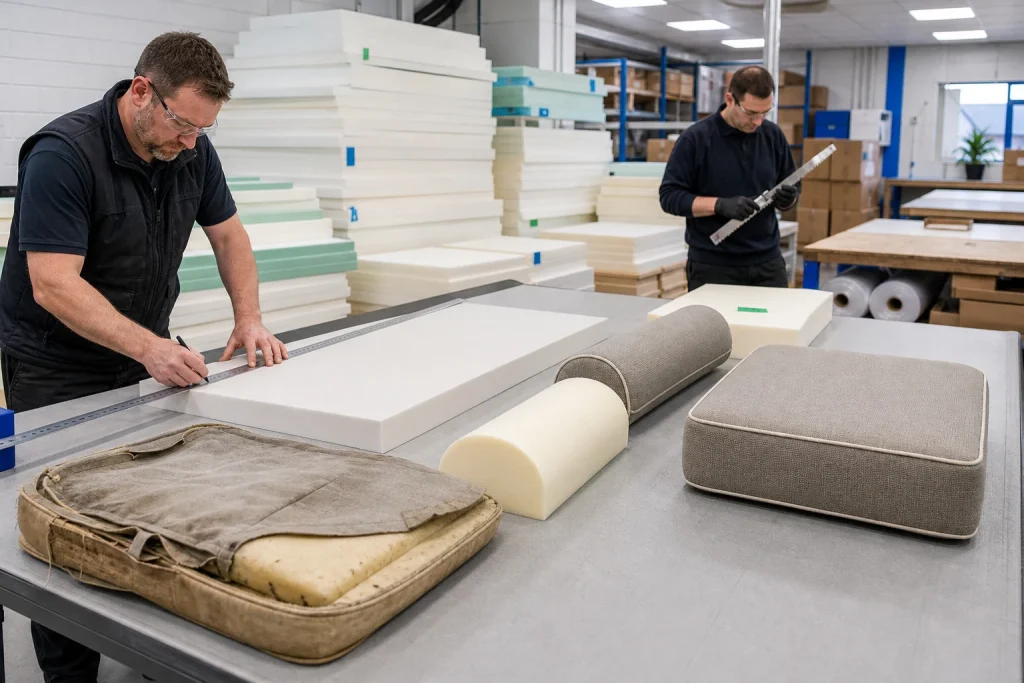
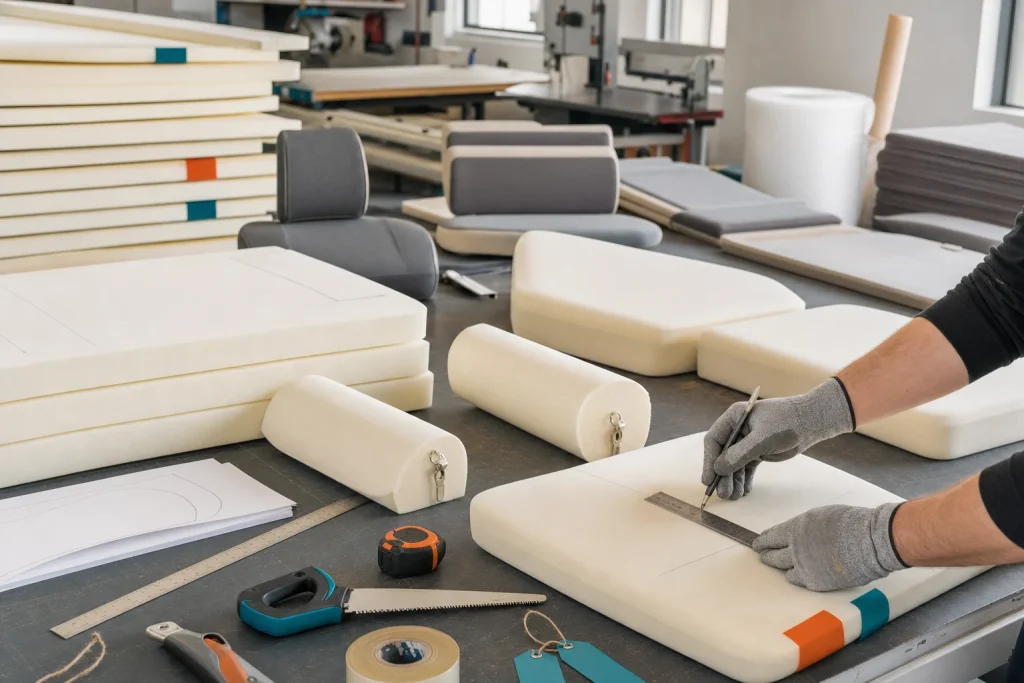
Boats and yachts come in a variety of shapes and sizes, and their seating arrangements are equally diverse. Customization is essential to ensure a seamless fit and appearance. Opting for custom-cut foam ensures that every inch of your vessel’s seating is properly cushioned, minimizing gaps and providing a polished aesthetic.
Types of Marine Foam:
- Marine-Grade Open-Cell Foam: This foam is engineered for marine use, designed to dry quickly and resist mold growth. It’s an excellent choice for cabin cushions and seating that has adequate protection from direct water exposure.
- Closed-Cell Foam: Closed-cell foam is water-resistant, making it an ideal option for applications that are exposed to damp conditions. It’s often used for boat mattresses, deck cushions, and other areas where direct water contact is more likely.
- Dry Fast Foam: This specialized foam is known for its rapid-drying properties, making it a suitable choice for cushions that may get wet occasionally. It’s often used for boat seats, outdoor lounges, and areas prone to splashes.
Caring for Marine Upholstery Foam:
To ensure the longevity of your boat or yacht foam, proper care is essential. Regular cleaning, avoiding harsh chemicals, and storing cushions in a dry area when not in use are simple practices that can extend the lifespan of your foam and upholstery.
Conclusion:
When it comes to boat and yacht upholstery, choosing the right foam is akin to setting a course for comfort and durability on the open seas. From withstanding sun and salt to delivering the utmost comfort, foam for marine environments must meet exceptional standards. By opting for water-resistant, UV-resistant, and high-density foam, you’re investing in the enjoyment and longevity of your nautical adventures. So, as you navigate the waves, let your vessel be a testament to the art of crafting luxurious and comfortable onboard spaces that truly enhance the maritime experience.