Advice
How Much Bigger Should Foam Be Than a Cushion Cover?
When replacing cushion foam, it can be tempting to order a piece that matches the exact measurements of the cushion cover. In practice, though, foam is often cut slightly larger

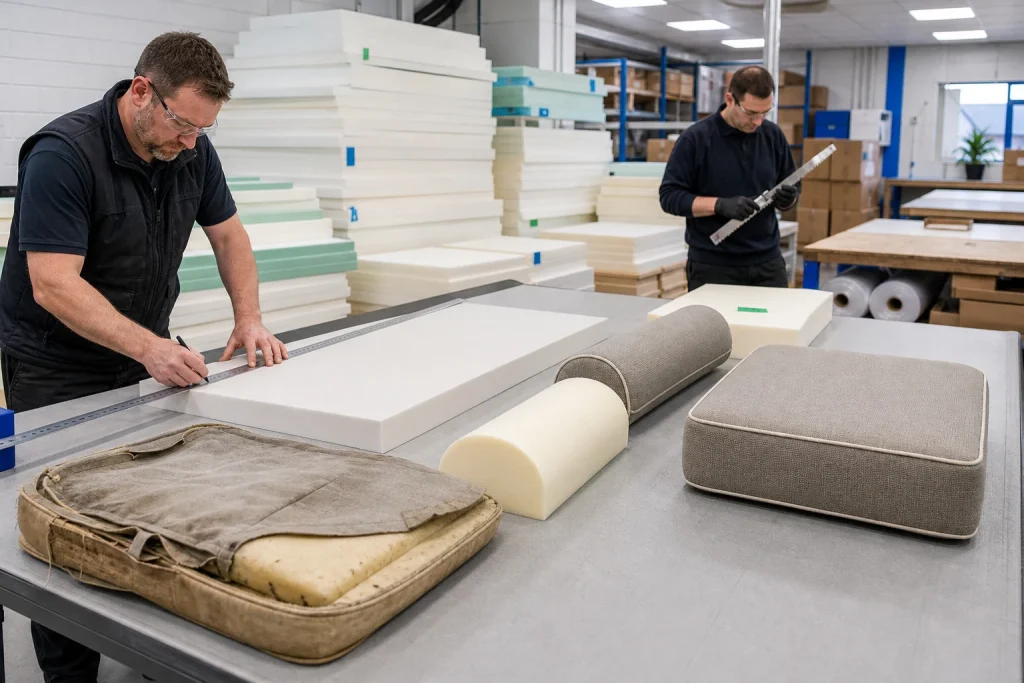
Flat caravan cushions can make a perfectly good seating area feel tired. The covers may still look presentable, but the seat dips, the front edge collapses and you can feel the hard base underneath.
In many cases, the answer is not a full interior refit. Replacing the inner foam with a suitable grade and shape can restore support, improve comfort and help the cushions sit neatly again.
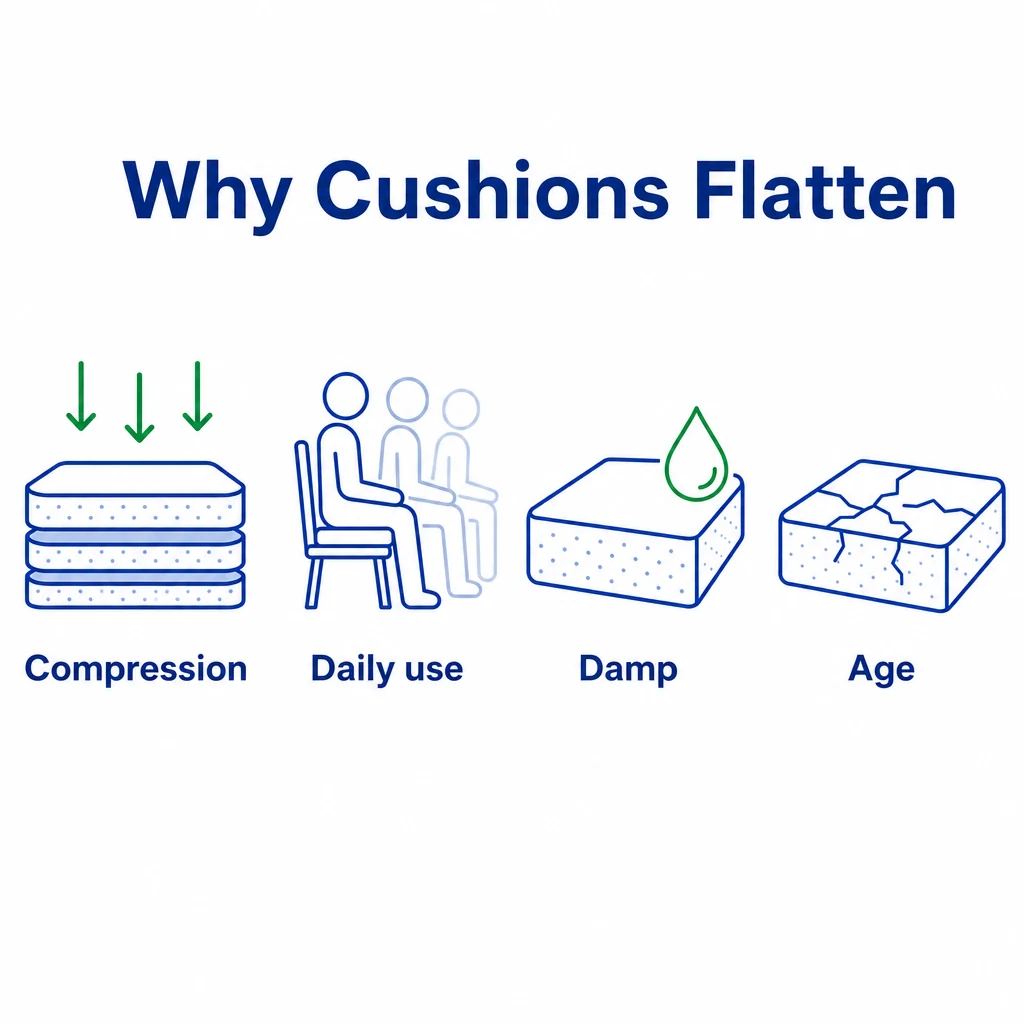
Caravan seating works hard. The same cushions may be used for sitting, lounging, dining and, in some layouts, sleeping. Over time, repeated compression weakens the foam structure, so it no longer springs back as it once did.
Heat, storage conditions and moisture can also affect old foam. A cushion stored under pressure or left slightly damp may become misshapen, musty or crumbly. The most obvious signs are a flattened centre, rounded-off corners, loose-looking covers and a seat that bottoms out when you sit down.
The front edge often fails first because it takes extra pressure as people slide in and out. That is why a tired caravan seat can look sloped or feel as though it is pushing you forward.
Before choosing new foam, it helps to work out whether the problem is the foam, the cover or the base underneath. Remove the cushion if you can and place it on a flat surface. If the foam has stayed dipped, cracked or uneven, the inner is likely to be the main issue.
Next, check the cover. If the seams, zip and piping are still sound, it may be possible to reuse it with a new inner. If the cover is stretched but not damaged, a correctly cut replacement can often fill it out again.
Also look at the support below the cushion. A loose board, broken slat or weak webbing can make even new foam feel unsupportive. Sorting the base first helps the replacement foam perform properly and keeps the finished cushion sitting level.
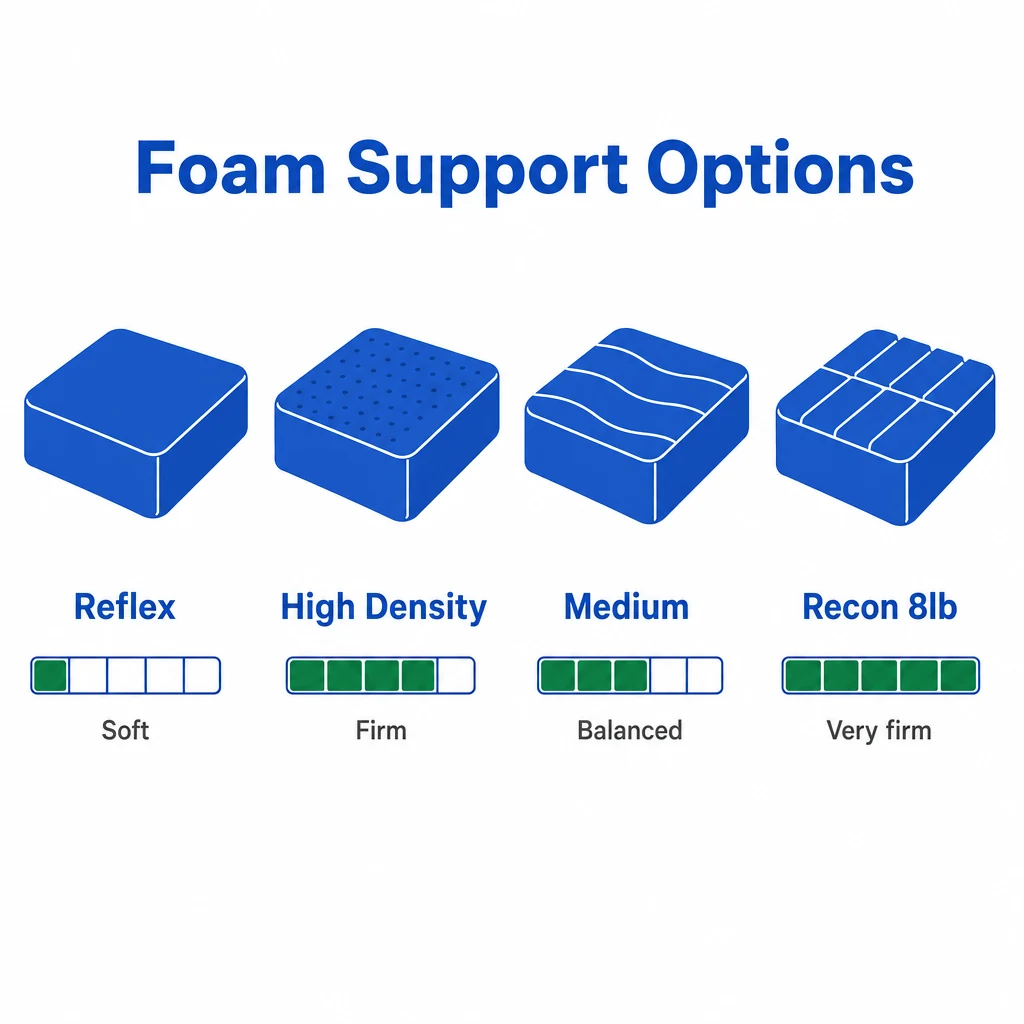
The right foam depends on how the cushion is used. For frequently used caravan seats, High Density Foam is often a good starting point because it offers firmer support and holds its shape well. Reflex Foam can also be useful where you want a more responsive, springy feel with good recovery after sitting.
Medium Density Foam may suit back cushions, occasional seating or areas where a softer feel is preferred. Recon Foam and Recon Foam 8lb are much firmer options, often considered where strong support or a dense build-up layer is needed, though they can feel too firm for relaxed seating if used on their own.
There is no single best choice for every caravan cushion. Seat bases, back pads, dinette cushions and bed-conversion sections can all need different firmness levels. If you are comparing options, the general foam range is a useful way to understand the main types before deciding.
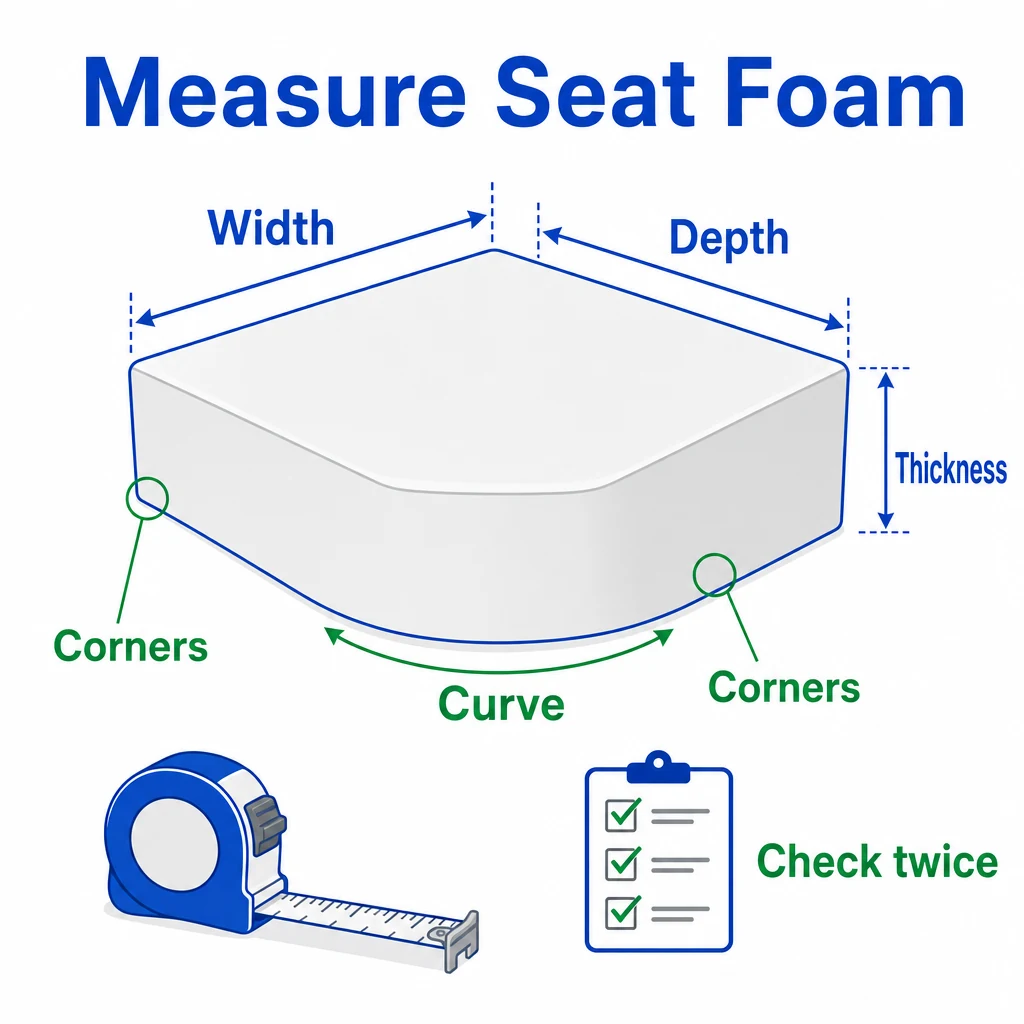
Caravan cushions are rarely simple rectangles. Many have clipped corners, shaped backs, angled sides or rounded front edges to fit compact seating areas neatly. Replacing them with a generic block can leave gaps, strained covers or an uncomfortable edge.
A Bull Nose Foam front can help recreate the rounded leading edge found on many seats, giving a softer finish behind the knees. A Clipped Bolster Cushion may be needed where the back support follows a shaped corner. A Clipped Window Seat can help the cushion fit around frames, trims or restricted spaces without forcing the cover.
Accurate cutting also helps the cover look right. When the foam matches the original profile, seams sit where they should, corners fill properly and the cushion looks made for the space rather than squeezed into it.
If the old foam has kept its shape, it can often be used as a pattern. Measure the length, width and thickness, then note any curves, clipped corners, bull-nose fronts or angled sections. If the old foam is badly distorted, measuring the cover seam to seam may give a better guide.
Take photos and make simple notes before removing anything. Mark which cushion is which, especially if several look similar but fit different positions. Dining seats, bed infill sections and back cushions can vary by small amounts.
Helpful finishing items, such as stockinette, polyester wrap or related fitting materials, can make inserting foam into covers easier and improve the final feel. You can browse ancillary items if you are refreshing covers at the same time. For made-to-measure help, see the caravan and motorhome cushions service.
You do not always need to replace every cushion at once. If one seat is used far more than the others, replacing that individual Caravan Cushion may solve the main comfort issue. However, consider height and firmness matching if cushions sit side by side or form a bed.
If several cushions are the same age and all feel soft, replacing the full seating set can give a more consistent finish. Similar principles apply to other shaped seating, including boat and yacht cushions and garden furniture cushions, where support, fit and suitable foam choice all matter.
If you are sending templates or ordering replacement inners, it is worth checking the delivery and returns information so you know what to expect before you begin.
Can I keep my existing caravan cushion covers?
Often, yes. If the covers, zips and seams are in usable condition, new foam can usually be cut to fit them. The cover should be checked first for stretching or damage.
What foam is best for caravan seats?
There is no one-size-fits-all answer. Regular seat bases often need a supportive foam such as High Density Foam or Reflex Foam, while backs may suit a slightly softer option.
Why does the front edge of my caravan cushion collapse?
The front edge takes repeated pressure as people sit down and move off the seat. A shaped replacement, such as Bull Nose Foam, can help recreate the original rounded support.
Can replacement foam be cut to clipped or angled shapes?
Yes. Clipped corners, bolsters, window seats and other shaped caravan cushions can be cut from measurements, old foam or suitable templates.
If your caravan cushions feel flat or uneven, Foam Centre can help you choose and cut replacement foam to suit the shape, support and finish you need.
When replacing cushion foam, it can be tempting to order a piece that matches the exact measurements of the cushion cover. In practice, though, foam is often cut slightly larger
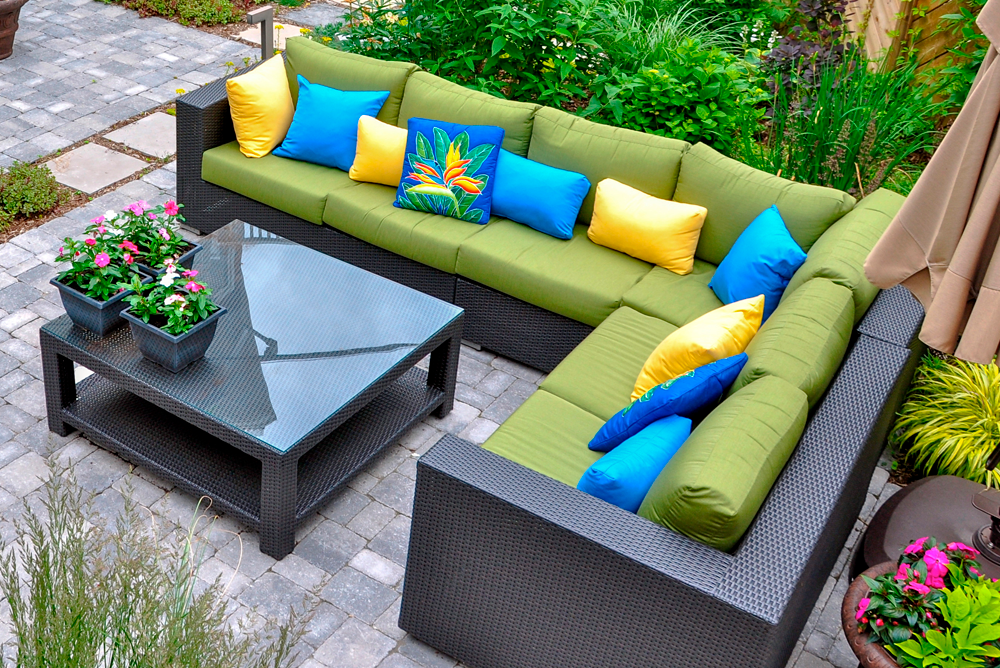
Yes, in many cases, you can put new foam inside old cushion covers. It is a practical way to improve the comfort, shape and appearance of a sofa, chair or

When selecting new cushions for your furniture, the type of foam inside can significantly impact both comfort and longevity. Whether you are replacing worn out sofa cushions or commissioning bespoke
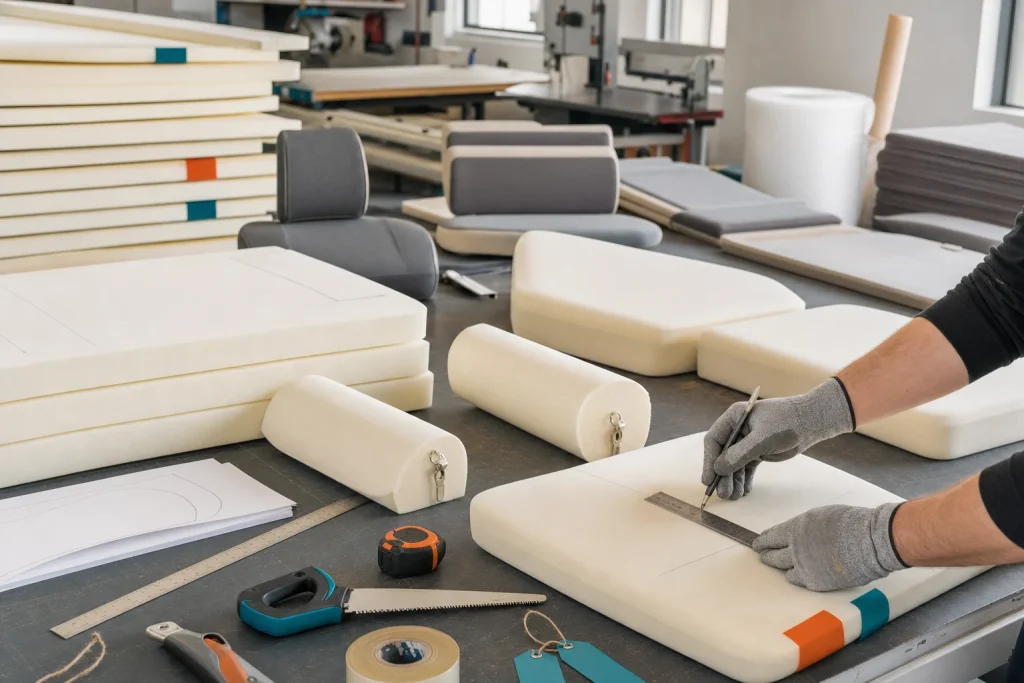
Learn how density, cushion shape, bolsters and bull-nose edges affect caravan seat foam comfort on long journeys and overnight stays.

Sagging seat cushions are something most people notice at some point, whether it is a well-used family sofa or a newer piece that just has not held up as expected.
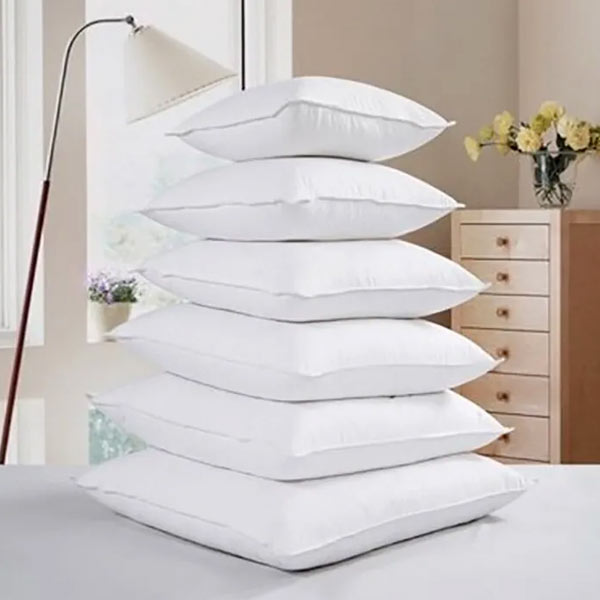
When people shop for new furniture, most of the attention naturally goes towards fabric, colour, and overall design. Seat and cushion foam rarely gets much thought at the buying stage.