Advice
How Much Bigger Should Foam Be Than a Cushion Cover?
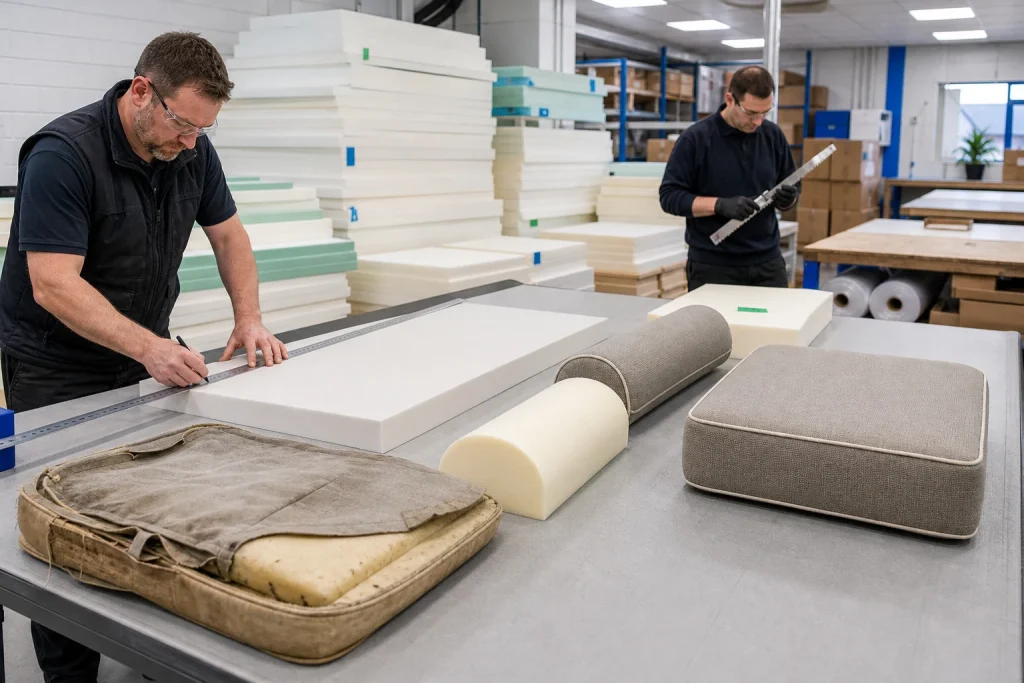
When replacing cushion foam, it can be tempting to order a piece that matches the exact measurements of the cushion cover. In practice, though, foam is often cut slightly larger

Replacing a tired chair or sofa cushion sounds like it should be straightforward. Pick “soft”, “medium” or “firm”, pop the new foam in, and enjoy that fresh, supportive feel again. But if you’ve ever done it, you may have noticed something a bit frustrating: some cushions feel brilliant at first, then start to dip far sooner than expected.
Most of the time, that comes down to one overlooked detail: foam density. Firmness is what you feel when you sit down. Density is what you notice after weeks and months of everyday use. Get the balance right and your seating stays comfortable for longer. Get it wrong and you’re back to rotating cushions and avoiding “the bad seat”.
Foam density is a measure of how much material is packed into the foam. It’s usually shown as a number (often in kg/m³). The higher the density, the more “substance” there tends to be in the foam, which typically helps with long term shape and support.
What density doesn’t automatically mean is “this will feel firm”. That’s the common mix-up. A foam can be high density and still feel comfortable and forgiving. Another foam might feel quite firm initially but be lower density, meaning it may not hold up as well once it’s been sat on day after day.
So, if you only choose by how it feels when you press it with your hand, you’re basically judging a cushion by a two second audition. Helpful, but not the whole story.
Firmness is the “first sit” experience. Density is the “six months later” experience. Both matter, but they solve different problems.
If you love that soft, sink-in feel, you can absolutely go for comfort. It just often works best when the foam still has enough density to bounce back and keep its shape. Otherwise, a cushion can start to feel lower and flatter over time, even if it was lovely on day one.
Think of it like trainers. They can feel cushy in the shop, but what you really want is support that doesn’t collapse once you’ve walked miles in them.
There isn’t one perfect density for every sofa or chair, because homes aren’t all the same. Some sofas are treated gently. Others are basically a family headquarters, complete with kids, pets, guests, and at least one person who always sits in the exact same spot.
For an everyday living-room sofa, the seat cushions usually need the most resilience. This is where choosing a foam with a supportive feel and a sensible density tends to pay off. If you’re replacing a sagging seat, you’re usually better aiming for lasting support first, then fine-tuning comfort, rather than chasing the softest option straight away.
For occasional chairs or “spare room” seating, you can often be a bit more flexible. If it’s used now and again, you may not need the most heavy-duty choice. Still, it’s worth remembering that occasional seating often gets a lot of edge sitting (people perched on the front while chatting), which can wear foam faster than you’d think.
For deep, lounge-style sofas, people often want that cosy, relaxed feel without the cushion turning into a dip. A common approach is to keep a supportive foam core and use a softer wrap or surface feel, so it’s comfortable without sacrificing shape. It’s a bit like having a supportive mattress with a softer topper rather than buying something that’s soft all the way through.
For home office chairs, support can make a bigger difference than you expect. You might not notice an issue in ten minutes, but you will after a long stint at a desk. If the cushion is thin, it needs enough support to stop you feeling the base underneath, and density becomes more important.
It’s tempting to choose one foam and use it everywhere, just to keep things simple. In practice, seat cushions and back cushions often do different jobs.
Seat cushions carry most of the load, so they typically benefit from more support and better bounce-back. Back cushions are usually about comfort and posture, and they often feel better slightly softer. If you want a more upright sit, you might prefer firmer backs, but it’s not a rule. It’s about how you like your sofa to feel, and how the sofa is built.
If you’re replacing only one cushion, it’s also worth thinking about how it will match the others. A brand-new seat pad in a different feel can be very noticeable, especially if the rest of the suite is a bit worn in.
 Two people can choose a similar foam and get completely different outcomes because the furniture underneath changes how it performs.
A thick cushion can feel more forgiving even when the foam is supportive, simply because there’s more material to compress. Thin cushions (modern bench seats, window seats, some dining chairs) are less forgiving. If the foam isn’t supportive enough, you may “bottom out”, which is that unpleasant feeling of hitting the base through the cushion.
Then there’s what sits underneath the cushion: webbing, springs, boards, or a base that’s started to sag. If the base has lost its support, even the best foam is doing extra work. Replacing foam can still improve comfort, but the best results usually come when the seat base is in good condition too.
Sometimes it’s obvious. The cushion looks flat, you can see a dip where you always sit, and it doesn’t bounce back even after a good shake. Other times it’s more subtle: the sofa feels lower than it used to, or you keep shifting position because nothing quite feels supportive.
If you can feel the frame or the base underneath, that’s a strong sign the foam isn’t doing its job anymore. And if you’re constantly swapping cushions around to “find a better one”, it’s usually foam fatigue rather than the cover being the problem.
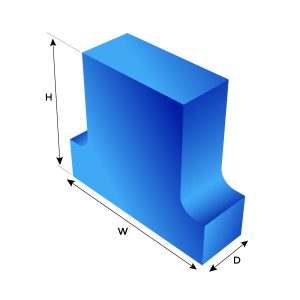
Even a well chosen foam can look messy if it doesn’t suit the cover. Too large and you get bulging corners and strained seams. Too small and the cover looks baggy, the foam slides, and the cushion loses its shape at the edges.
Accurate measuring is worth the effort, especially if your cushion has softened and changed shape over time. Covers can relax too, so it’s not always as simple as copying the old foam dimensions and calling it a day. If you’re unsure, we can help you sense-check measurements before you order.
Here at The Foam Centre, we cut foam to your exact sizes for sofa and chair cushions, so the finished result looks intentional, not improvised. And if you’re stuck between two options, tell us how the furniture is used and the kind of feel you prefer, and we’ll point you towards a foam choice that makes sense.
 A lot of customers ask for that sweet spot: soft enough to be inviting, but supportive enough to keep its shape. It’s a fair ask, and it’s usually achievable with the right combination.
Often, the answer isn’t “go softer”. It’s choosing a foam that still has enough density and resilience for daily use, then adjusting the feel with the overall build (for example, a supportive core with a softer surface feel). That way, you get comfort without the seat slowly turning into a permanent hollow.
It’s also worth remembering that new foam can feel a touch firmer at first. Once it’s been used a little, it tends to settle into its true feel.
If you don’t want to overthink it, keep it practical. Start with how often the seat is used (daily sofa versus occasional chair). Consider cushion thickness and what’s underneath. Prioritise long-term support for seat cushions, then choose the comfort level you like. Finally, make sure the foam fits the cover properly, because fit can make or break the finished look.
If you’d rather not gamble, contact us at The Foam Centre. Tell us what you’re replacing, how it’s used, and the size you need, and we’ll help you choose a foam option that’s likely to stay supportive rather than going flat quickly.
Comfort shouldn’t be a guessing game. With the right density and the right fit, your sofa or chair can feel properly revived, and stay that way.
When replacing cushion foam, it can be tempting to order a piece that matches the exact measurements of the cushion cover. In practice, though, foam is often cut slightly larger

Yes, in many cases, you can put new foam inside old cushion covers. It is a practical way to improve the comfort, shape and appearance of a sofa, chair or

When selecting new cushions for your furniture, the type of foam inside can significantly impact both comfort and longevity. Whether you are replacing worn out sofa cushions or commissioning bespoke
Why caravan cushions flatten, how to spot worn seat foam and which replacement foam can restore comfort, shape and support.
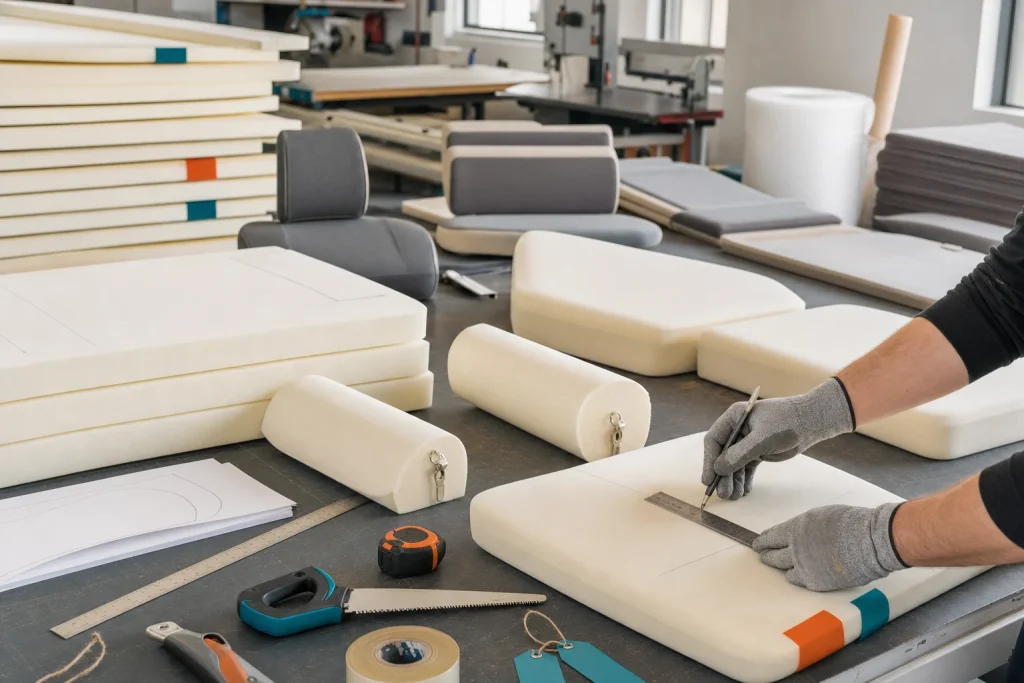
Learn how density, cushion shape, bolsters and bull-nose edges affect caravan seat foam comfort on long journeys and overnight stays.

Sagging seat cushions are something most people notice at some point, whether it is a well-used family sofa or a newer piece that just has not held up as expected.