
Advice
Can You Put New Foam Inside Old Cushion Covers?
Yes, in many cases, you can put new foam inside old cushion covers. It is a practical way to improve the comfort, shape and appearance of a sofa, chair or

When replacing cushion foam, it can be tempting to order a piece that matches the exact measurements of the cushion cover. In practice, though, foam is often cut slightly larger than the space it needs to fill.
This helps the cushion look fuller and can prevent the fabric from appearing loose or wrinkled once the new foam has been inserted.
The amount of extra foam needed is usually fairly small and will depend on the style of cushion, the type of cover and the foam being used.
Going too large can create its own problems, so the aim is not simply to squeeze as much foam as possible into the cover.
Getting the measurements right can make a noticeable difference to both the appearance and feel of the finished cushion.
As a general guide, cushion foam may be cut around 1 to 2.5 cm larger than the internal measurements of the cover, depending on the size and construction of the cushion.
Foam compresses fairly easily, so this small amount of additional material can help it sit snugly inside the fabric without making the cushion unnecessarily tight.
Larger sofa cushions may tolerate a little more compression than small, tightly fitted seat pads.
There is no single allowance that works perfectly for every cushion. Stretchy upholstery fabrics may accommodate slightly oversized foam more easily, while rigid fabrics, leather and tightly constructed covers may require more careful sizing.
If the foam is made considerably larger than the cover, it can become difficult to insert and may place unwanted pressure on the stitching and zip.
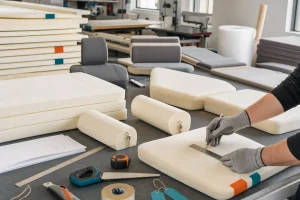
Foam naturally compresses when pressure is applied, which means a piece that is slightly oversized can still fit comfortably inside a cushion cover.
Once inserted, the foam pushes gently against the fabric and helps the cushion maintain a smooth, filled out appearance. Without this slight compression, the cover may not sit tightly enough around the insert.
This is particularly useful when replacing older foam that has lost some of its original shape. Old cushion filling can flatten over time, sometimes making the cover appear larger than it originally was.
A correctly sized replacement insert can restore the shape of the cushion and make the fabric look noticeably neater without changing the cover itself.
For the most accurate result, measure the cushion cover rather than relying entirely on the dimensions of the old foam. Existing foam may have compressed, shrunk or become misshapen after years of use, so copying it exactly could result in the new insert being too small.
Measure the length, width and depth of the cover from seam to seam while it is empty and laid as naturally as possible.
Take several measurements if the cushion is not perfectly square or rectangular. Some sofa cushions taper slightly towards the back, while window seats, caravan cushions and bespoke furniture can have angled or curved edges.
Making a simple sketch with each measurement marked clearly can be useful when ordering foam cut to size, particularly where several similar cushions are being replaced at once.
Foam that is significantly too large can make a cushion much firmer than expected because it is constantly being compressed inside the cover.
The fabric may also become overly stretched, particularly around corners, seams and zips. In more extreme cases, forcing the foam into the cover could damage stitching or make the zip difficult to close.
A cushion can also lose its intended shape if there is too much filling inside it. Corners may bulge, edges can become uneven, and the surface may look rounded when it should sit relatively flat.
A small amount of oversizing is often useful, but once the foam has to be heavily compressed just to fit inside the cover, it is likely to be too large.
Foam that is too small will usually leave the cushion cover looking loose, creased or slightly deflated.
You may notice spare fabric around the edges or corners, and the insert can sometimes move around inside the cover when the cushion is being used. This can make an otherwise good quality cushion look worn even when the foam itself is brand new.
Undersized foam may also provide less support because it does not fully occupy the available space.
On a sofa or chair, this can result in edges collapsing more easily when someone sits down. Choosing the correct dimensions is just as important as selecting the right foam density, since even suitable foam may not perform as expected if it does not fit the cover properly.
Cushion foam is often best cut slightly larger than the cover so that it fills the fabric properly and creates a smooth, supportive finish. An allowance of roughly 1 to 2.5 cm may be suitable in many cases, although the right amount will depend on the cushion size, cover material and type of foam being used.
Careful measuring is usually more reliable than simply copying an old, compressed foam insert.
If you are replacing sofa cushions, chair pads or another type of upholstered seating, taking a little extra time over the measurements can make the finished result look far better.
When you are unsure, it is worth checking your dimensions before ordering foam cut to size, especially with unusual shapes or tightly fitted covers where even a small sizing difference can matter.
Yes, in many cases, you can put new foam inside old cushion covers. It is a practical way to improve the comfort, shape and appearance of a sofa, chair or

When selecting new cushions for your furniture, the type of foam inside can significantly impact both comfort and longevity. Whether you are replacing worn out sofa cushions or commissioning bespoke
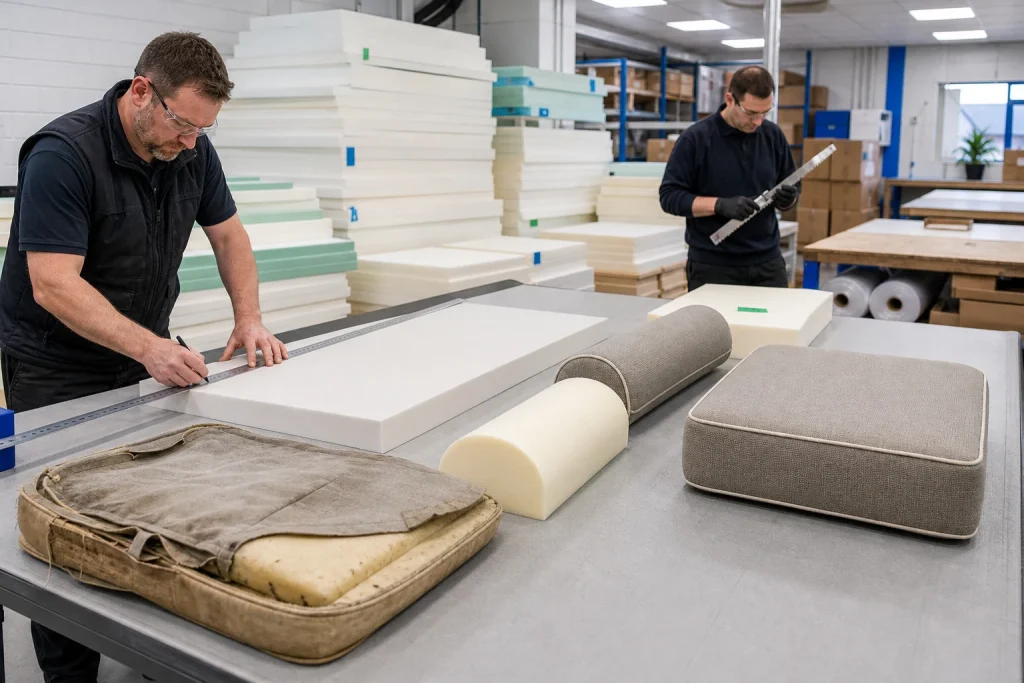
Why caravan cushions flatten, how to spot worn seat foam and which replacement foam can restore comfort, shape and support.
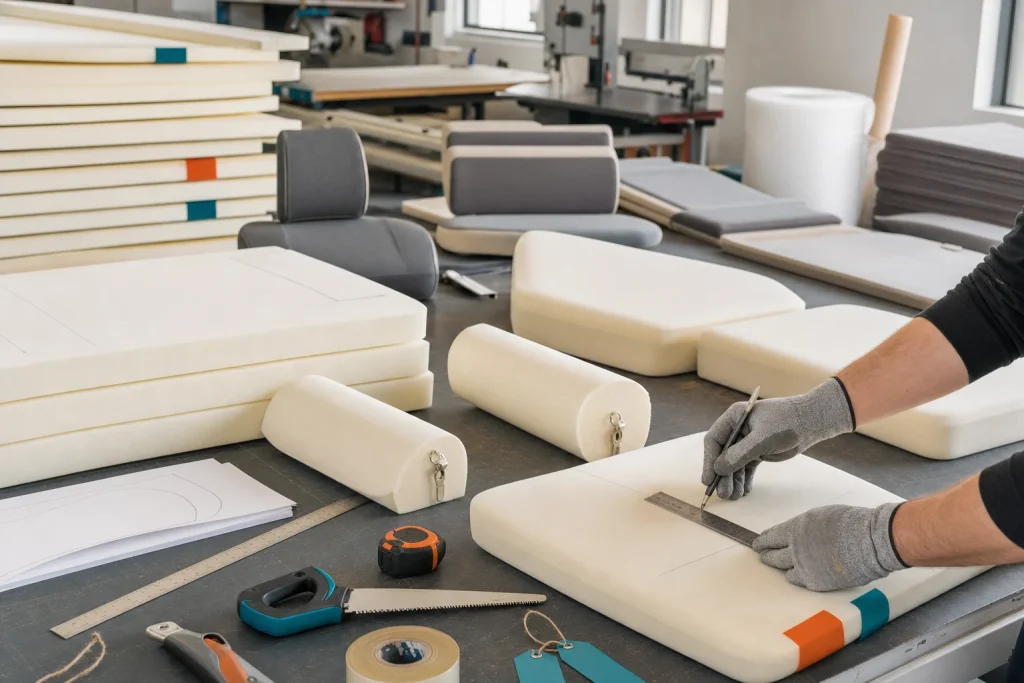
Learn how density, cushion shape, bolsters and bull-nose edges affect caravan seat foam comfort on long journeys and overnight stays.

Sagging seat cushions are something most people notice at some point, whether it is a well-used family sofa or a newer piece that just has not held up as expected.
When people shop for new furniture, most of the attention naturally goes towards fabric, colour, and overall design. Seat and cushion foam rarely gets much thought at the buying stage.