Yes, in many cases, you can put new foam inside old cushion covers. It is a practical way to improve the comfort, shape and appearance of a sofa, chair or bench without replacing the entire piece of furniture.
If the fabric is still in good condition, changing the internal foam may make the cushions feel noticeably newer.
Over time, cushion foam can soften, flatten or lose its ability to spring back into shape. The covers may still look perfectly presentable, which makes replacing only the foam a sensible option.
The result will depend on the condition of the covers, the accuracy of your measurements and the type of foam you choose.
Check the Condition of the Cushion Covers
Before ordering new foam, remove the existing inserts and inspect the covers carefully. Look for torn seams, broken zips, thinning fabric or areas that have stretched out of shape.
Small repairs may be worth making before installing the new foam, especially if the cover is likely to be subjected to pressure.
It is also a good idea to clean the covers if the care label allows it. Dust, crumbs and old fibres can collect inside cushion covers over the years.
Starting with clean, repaired covers may help the finished cushions look neater and reduce the risk of damaging the new foam during installation.
Measure the Covers Accurately
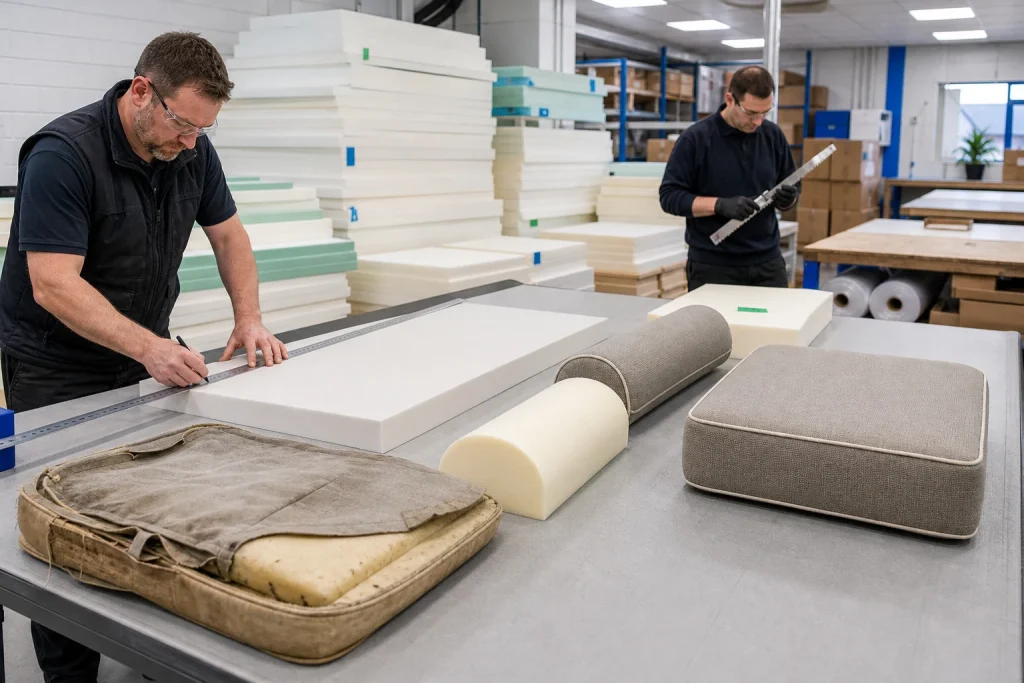
Accurate measurements are essential when replacing cushion foam. Measure the inside of the empty cover rather than relying on the size of the old insert, as worn foam may have shrunk or changed shape.
Record the width, depth and thickness, checking several points if the cushion is curved or unusually shaped.
Try not to pull or stretch the fabric while measuring. A cover measured under tension could lead to foam that is too large once fitted.
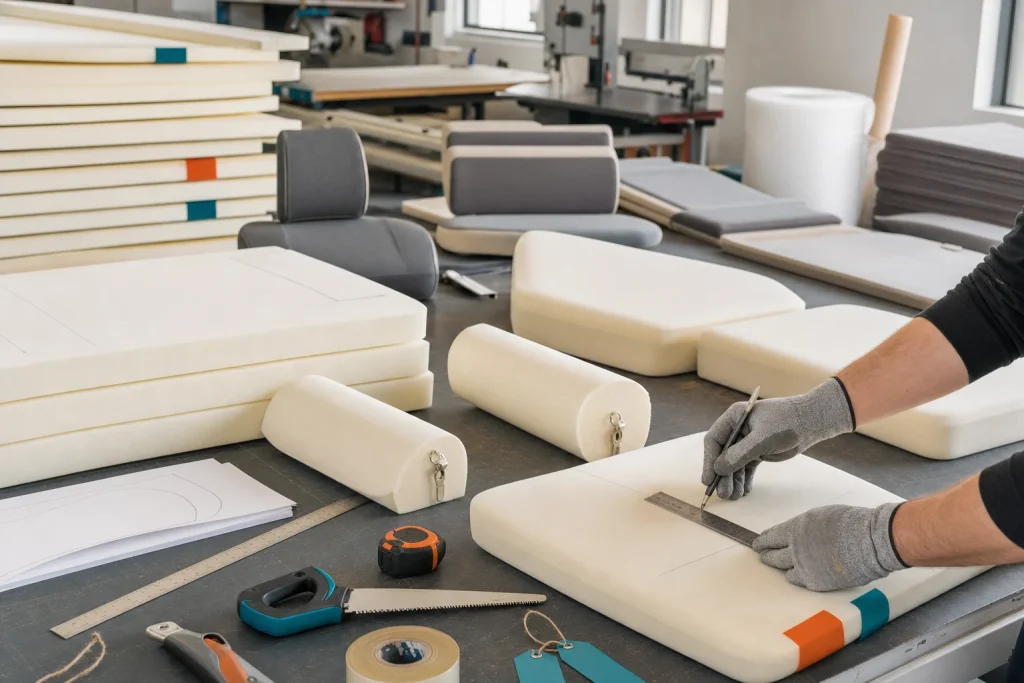
For shaped cushions, making a paper template may be the safest approach, particularly when dealing with rounded corners, angled backs or bay window seats.
Choosing the Right Type of Foam
The correct foam will depend on where the cushion is used and how often it is sat on. Sofa seat cushions generally need a supportive, durable foam that can cope with regular pressure.
Back cushions may suit a softer grade, as they usually provide comfort rather than carrying a person’s full weight.
Dining chairs, window seats, caravan cushions and occasional chairs may each require a slightly different firmness.
Choosing the hardest foam available is not always the best solution. A foam that is too firm could feel uncomfortable, while one that is too soft may compress quickly and offer limited support.
Should the Foam Be Larger Than the Cover?
Replacement foam is sometimes cut slightly larger than the internal measurements of the cover.
This helps fill out the fabric and creates a plumper, more even appearance. The amount of extra size required may depend on the stretch of the material and whether a fibre wrap will be added.
However, significantly oversized foam can strain the zip, seams and surrounding fabric. It may also make the cushion difficult to insert and leave the cover looking distorted. The aim is to achieve a snug fit without forcing the material beyond its natural shape.
Using Dacron Wrap Around the Foam
Dacron wrap, sometimes called polyester wadding, is often placed around cushion foam before it is inserted into the cover.
It provides a softer surface, rounds off sharp foam edges and helps create a fuller appearance. It may be particularly useful when the cover has softened slightly with age.
The wrap can also reduce friction between the foam and the fabric, which may make insertion easier. It is usually attached to the foam using a suitable upholstery adhesive.
Too much wadding can make the cushion bulky, so the thickness should be chosen with the size and condition of the cover in mind.
How to Insert New Foam into an Old Cover
Open the zip fully and gently fold or compress the foam before placing it inside. Avoid pulling heavily on the zip or seams, as older fabric may be less resistant to pressure.
Work the foam into the far corners first, then gradually ease the rest of the cover around it.
Once the foam is inside, adjust the fabric until the seams sit along the edges and the corners line up properly.
Pat and smooth the cushion from several directions to distribute the filling evenly. It may take a little time for the newly fitted foam to settle into the cover and reach its final shape.
Common Problems to Avoid
One common mistake is using the old foam as the only measuring guide. As foam ages, it can become thinner, shorter or misshapen, which may lead to an inaccurate replacement.
Ordering foam without considering the condition and stretch of the cover can leave the cushion looking either loose or overfilled.
It is also worth avoiding foam that is unsuitable for the intended use. Lightweight foam may be fine for decorative cushions, but it could wear quickly when used for everyday seating.
Forcing foam through a narrow zip opening can also damage both the cover and the insert, so patience is important during fitting.
Conclusion
Putting new foam inside old cushion covers is often a cost effective way to refresh tired furniture.
Provided the covers are still strong and can be measured accurately, replacement inserts may restore support, comfort and shape without changing the overall style of the furniture.
The best results are likely to come from choosing an appropriate foam grade, allowing for a snug fit and using Dacron wrap where needed.
Taking care during the measuring and fitting process can help the cushions look balanced and feel comfortable for years to come.